TL;DR :
Tune your guitar every time you play, set it up for comfort, and maintain a relaxed posture to avoid pain. Start slowly, focus on achieving a clean sound, and review your setup weekly.
Key takeaways:
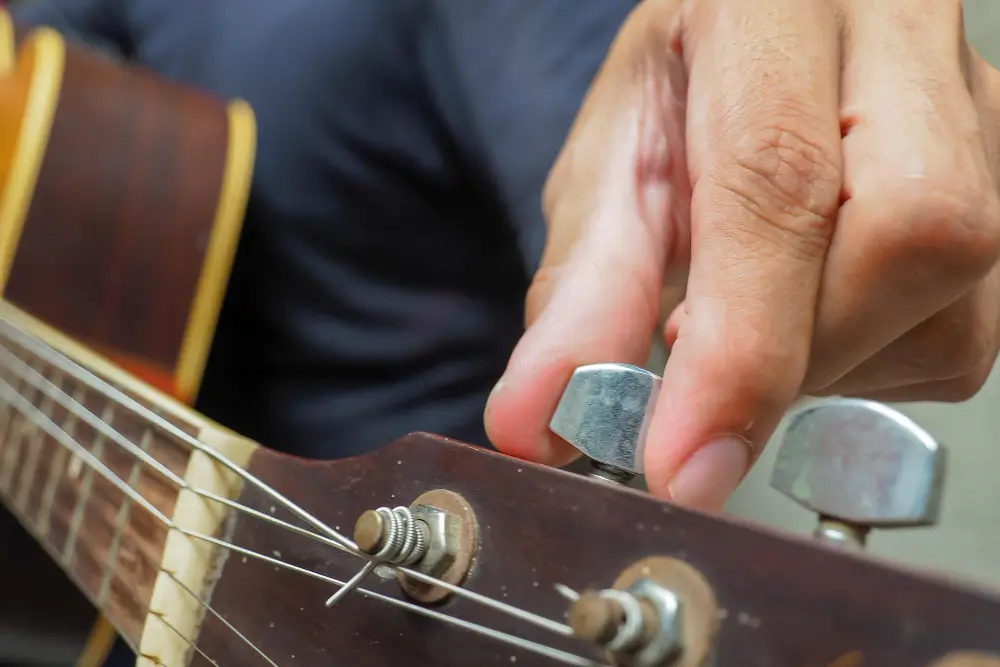
- Tune before every session using a clip-on tuner or a free app; learn basic ear tuning early.
- A simple setup check (action, neck relief, intonation) can make chords cleaner and practice easier.
- Maintaining a relaxed posture with the correct hand position helps prevent pain and accelerates progress.
- Track small wins weekly; clarity over speed builds lasting skill.
When you’re just starting with guitar, it can be overwhelming. Your strings sound off. Your fingers hurt. You wonder if you’re doing it wrong. Most beginners struggle with the same few things: tuning the guitar, setting it up properly, and finding a posture that doesn’t leave you sore after 20 minutes.
The good news? These issues are fixable—often for free—and the sooner you address them, the faster you’ll improve. This guide breaks down the essentials of guitar tuning basics, home-friendly setup tips, and posture habits to help you play better and feel comfortable doing it.
Why tuning matters (more than you think)
Even the best guitarist sounds off when their instrument is out of tune. Tuning is step one, every time you sit down to play. Yet many beginners skip it or don’t realise how critical it is.
Tuning helps you:
- Develop your ear
- Build confidence
- Make sure you’re practising the right pitches
And you don’t need expensive gear. You can master the basics of guitar tuning for free using widely available apps or simple methods.

Standard tuning for guitar
A six-string guitar in standard tuning follows this pattern (from thickest to thinnest string):
E – A – D – G – B – e
Try this memory trick:
Eddie Ate Dynamite, Good Bye Eddie
How to tune your guitar (free and easy)
1) Clip-on tuner
Clip one onto the headstock, pluck a string, and adjust the tuning peg until you’re in tune. They’re affordable, accurate, and great for noisy rooms.
2) Free tuning apps
Apps like GuitarTuna, Fender Tune, or Pano Tuner are free, reliable, and user-friendly. They listen through your phone’s microphone, making them ideal for quiet spaces.
3) Tuning by ear
While not essential on day one, ear tuning is a powerful skill. Use the 5th-fret method:
- 5th fret of low E = A string
- 5th fret of A = D
- 5th fret of D = G
- 4th fret of G = B (note the change here)
- 5th fret of B = high e
It takes practice, but it trains your ear and helps you hear when something is even slightly off.
Fixing common tuning issues
If your guitar won’t stay in tune, run through this quick checklist:
- Old strings: Worn strings slip and go flat faster. If they look dull or feel rough, replace them.
- Poor string winding: Wind neatly from top to bottom on the post, with 2–3 wraps on wound strings and 3–5 on plain strings.
- New string stretch: After installing, gently stretch each string along the fretboard and retune. Do this two or three times.
- Tuning pegs: If a tuner feels loose, the small nut or screw might need a slight tightening.
- Nut friction: Strings can catch in cheap or poorly cut nuts. If tuning “pings,” a tech can smooth the slots; graphite or nut lubricant can help.
What is a guitar setup—and why it matters
“Setup” refers to adjusting your instrument so that it’s easy to play and sounds in tune across the neck. Key parts include:
- String height (action): How high the strings sit above the frets
- Neck relief: The slight forward bow that lets strings vibrate cleanly
- Intonation: Whether notes stay in tune up the neck
- Fret condition and cleanliness: Smooth frets and a clean fretboard feel better and play better.
A good setup makes chords easier, notes clearer, and practice more enjoyable. It can be the difference between “I can’t play this” and “This feels great.”
Basic setup checks you can do at home.
You don’t need to be a luthier to spot and solve some common issues.
Action (string height)
Hold the low E down at the first and last fret. Look around the 7th–9th fret. You should see a small gap—approximately the thickness of a credit card. If there’s no gap, play will buzz; if there’s too much, chords feel hard.
Neck relief
Sight down the neck from the headstock. A very slight forward bow is normal. Severe bowing or back-bow usually needs a truss-rod adjustment by a pro.
Fret buzz scan
Play each fret on each string, slowly. Note any buzz or dead notes. If buzz is everywhere, action is likely too low or the neck is too straight. If it’s only in one spot, a fret might be high.
Intonation spot-check
Play an open string and then the 12th-fret harmonic and fretted note. If the fretted note is sharp or flat compared to the harmonic, the bridge saddle probably needs a small adjustment (best left to a tech unless you’re comfortable).
Clean the fretboard
Wipe strings after each session. A soft cloth on the fretboard keeps gunk from building up; lemon oil (for unfinished rosewood/ebony only), a few times a year, helps. Don’t oil finished maple boards.
When to get a professional setup
Consider taking the guitar to a technician if:
- It’s brand new (factory setups are often average)
- Chords feel unreasonably hard
- There’s a persistent buzz across many frets
- Notes go out of tune up the neck, even after you tune
- You’ve changed the string gauge, and the guitar now feels “off”
A pro setup is one of the best investments you can make. It’s often less expensive than a budget pedal and can significantly alter the sound of your guitar.
Choosing the right strings
Strings shape, feel, and tone.
- Light gauge (.009–.010 on electric, .010–.011 on acoustic): Easier on fingers; great for beginners and bends
- Medium/heavy: Fuller tone and volume; harder to fret and bend
- Coated strings: Last longer and resist sweat and grime; a smart choice if you don’t change strings often
If you’re new, start with a light gauge. As your technique grows, you can experiment.
Why posture is just as important as practice
Posture affects sound, stamina, and long-term comfort. Poor posture can lead to wrist pain, shoulder tightness, and the development of bad habits that hinder progress. Good posture allows you to practice longer with less strain and better tone.
Sitting vs standing
Sitting
- Use a chair without arms so you can move freely
- Keep both feet flat on the floor
- Rest the guitar on your right leg if you’re right-handed (left leg for classical position if you prefer)
- Sit upright—relaxed, not rigid
Standing
- Use a reliable strap adjusted so the guitar sits at roughly the same height as when you sit
- Keep shoulders relaxed; avoid hunching or tilting the neck up too high
- Keep the neck at a slight upward angle so the fretting wrist stays neutral
Hand and arm positioning
Left hand (fretting)
- Place your thumb roughly behind the neck, not hooked over the top (unless a specific technique calls for it)
- Curve your fingers and use the tips to fret just behind the fret wire
- Press only as hard as needed to get a clean note—extra pressure wastes energy and slows you down
Right hand (picking/strumming)
- Keep the wrist loose and neutral; avoid excessive bending
- Hold the pick between thumb and index, with a small tip showing
- For strumming, let the motion come from the wrist and forearm, not stiff elbow swings
- For picking, avoid planting the pinky; light contact on the bridge for palm-muting is fine when needed
Common posture mistakes
- Hunching forward: Strains neck and shoulders; pull the guitar toward you rather than leaning toward it
- Death-gripping the neck: Causes hand cramps and slow chord changes; lighten up
- Elbow position extremes: An Elbow jammed in or flared out creates tension; keep it loose and natural
- Resting the wrist too hard on the bridge: Can choke tone and limit motion; use only when muting is intended
Smart practice habits
More minutes don’t always equal more progress. Aim for consistent, focused practice.
Create a comfortable practice setup.
- Quiet, dedicated space
- Good lighting
- Supportive chair or strap
- Tuner and pick within reach
- Notebook or notes app to track sessions
Warm up well
- Gentle stretches for hands, wrists, and shoulders
- Five minutes of slow scales or chord changes to wake up the fingers
Listen to your body.
Pain is a signal. If something hurts, pause. Recheck posture, action height, and picking tension. Make small changes and try again.
The first 30 days—what to focus on
- Tune every time you play: Builds your ear and keeps practice meaningful
- Sound before speed: Clean notes and quiet strings matter more than fast playing
- Micro-goals: One chord change smoother, one riff cleaner—that’s a win
- Weekly review: Note what felt hard, what improved, and whether the guitar still feels comfortable
Quick troubleshooting guide
- Chords hurt too much: Try lighter strings; check action; relax the fretting hand
- Buzz everywhere: Action likely too low or neck too straight; consult a tech
- Notes sharp up the neck: Intonation likely off; bridge saddle adjustment needed
- Right wrist sore: Lower the guitar a touch when standing; keep wrist neutral and motion loose
- Left thumb cramps: Move the thumb to the back of the neck; lighten pressure

Review: tuning, setup, and posture
- Tuning: Use a clip-on or free app; learn basic ear-tuning as you go
- Setup: Check action, relief, and intonation; a pro setup can be a game-changer
- Posture: Neutral wrists, relaxed shoulders, and consistent guitar height sitting or standing
These foundations make learning smoother and more enjoyable. When your guitar feels easy to play, you’ll practise more—and progress faster.
Ready for Easier Playing? Contact Us
Tuning every session, performing a simple setup check, and maintaining a relaxed posture are the fastest ways to play cleaner and enjoy longer practice without pain. If your guitar still feels hard to play—or you’re not sure what to adjust—don’t guess. We’ll help you pick the right strings, sort your action and relief, and refine your posture so practice feels natural and progress sticks.
Contact us today for clear, practical guidance tailored to your guitar and goals:
https://www.argine.net/contact/